

The Intelligence Behind Precision Diagnostics
The Intercept IQ™ Platform is Kihealth Labs' proprietary precision diagnostics platform that integrates advanced molecular technologies, multi-omic data, artificial intelligence, and clinical intelligence into a unified framework for developing next-generation diagnostic assays.
Rather than relying on a single biomarker or technology, Intercept IQ combines multiple layers of biological and clinical information to identify disease earlier, improve diagnostic accuracy, and generate clinically actionable insights across numerous disease areas.
Intercept IQ™ Platform
- 1
 Sample Collection
 - 2
 Multi-Omic Analysis
 - 3
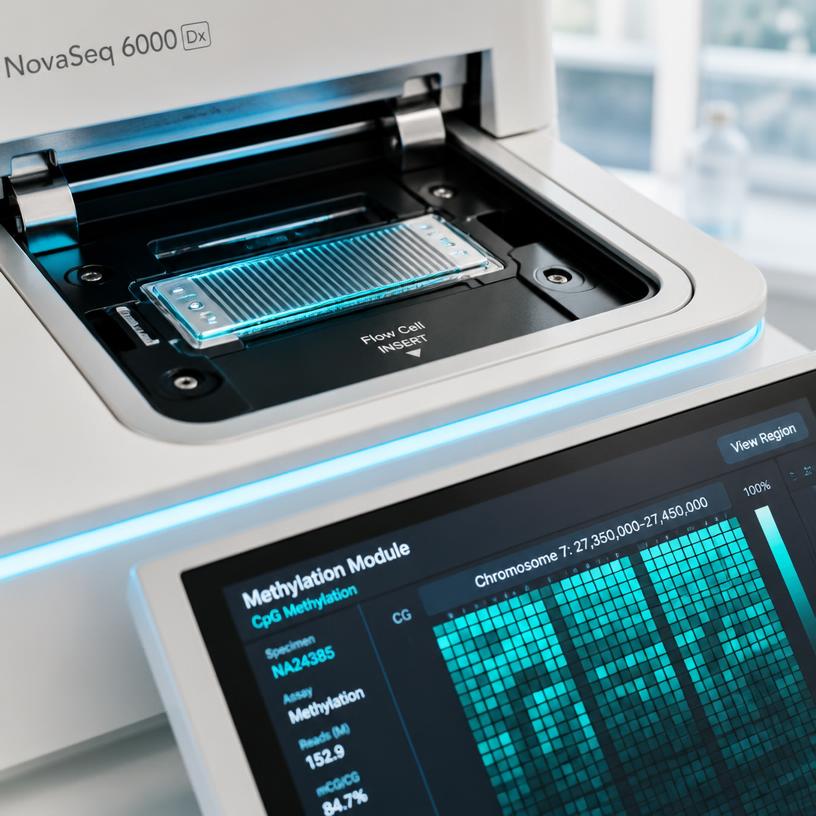 Advanced Molecular Analytics
 - 4
 Ki Intelligence™ AI Engine
 - 5
 Actionable Clinical Intelligence
 - 6
 Disease Interception
A Multi-Layer Precision Diagnostics Platform
Every disease is biologically complex. No single technology captures the full picture.
Intercept IQ was designed to integrate complementary molecular technologies into one scalable platform capable of developing highly sensitive diagnostic assays across multiple therapeutic areas.
Detection chemistry that resolves biology from a single blood draw.
Layers that give the molecular signal meaning for a specific patient.
The computational layer that turns integrated data into a clinical answer.
Cell-Free DNA
Measures circulating DNA released from damaged or dying cells, enabling non-invasive assessment of tissue-specific injury before structural changes become clinically apparent.
Select a layer component to inspect
How the Intercept IQ™ Platform Works
Every patient or research sample processed through the Intercept IQ™ Platform follows a standardized analytical workflow that transforms complex molecular and clinical information into clinically actionable intelligence. By integrating advanced laboratory science, patient-specific context, and the proprietary Ki Intelligence™ engine, the platform delivers insights designed to support earlier detection, predictive modeling, longitudinal monitoring, and more informed clinical decision-making.

Sample Collection
Patient or research samples are collected using validated collection methods that preserve molecular integrity for high-quality laboratory analysis.
Molecular Analysis
Disease-specific Intercept assays analyze highly sensitive molecular signals using advanced laboratory technologies. Depending on the application, the platform evaluates multiple biological dimensions to generate precise molecular data.
Clinical Context Integration
Molecular findings are integrated with patient-specific clinical information to provide a more comprehensive understanding of disease risk and biological activity.
Ki Intelligence™ Engine
The proprietary Ki Intelligence™ engine integrates molecular biomarkers, clinical information, longitudinal patient data, and continuously expanding research datasets to identify complex biological patterns that may not be apparent through traditional diagnostic approaches.
Advanced predictive models evaluate disease probability, biological activity, longitudinal change, and individualized risk to generate clinically meaningful insights.
Actionable Clinical Intelligence
The platform transforms complex molecular and clinical information into intuitive reports that support earlier detection, patient monitoring, and evidence-informed clinical decision-making.
Longitudinal Precision Monitoring
Each additional Intercept IQ assessment contributes to a longitudinal molecular profile, enabling physicians and researchers to monitor biological change over time rather than relying on isolated diagnostic snapshots.
Tracking serial measurements helps identify disease progression, evaluate therapeutic response, refine individualized risk assessments, and support more personalized care strategies.
From Molecular Data to Clinical Intelligence
The Intercept IQ™ Platform integrates advanced molecular diagnostics, clinical context, and the proprietary Ki Intelligence™ engine into a unified precision diagnostics ecosystem. Rather than reporting individual biomarkers in isolation, the platform transforms diverse biological signals into actionable intelligence.
Molecular signals surface biological change before conventional markers move.
Ki Intelligence™ translates complex patterns into individualized risk.
Serial assessments track trajectory, not isolated snapshots.
One validated platform extended across multiple disease areas.

A Scalable Precision Diagnostics Ecosystem
The Intercept IQ™ Platform serves as the scientific and computational foundation for every diagnostic program developed by Kihealth Labs. Rather than creating independent technologies for each disease, Intercept IQ enables the development of disease-specific assays using a common platform that integrates advanced molecular diagnostics, proprietary biomarkers, multi-omic data, and the Ki Intelligence™ engine.
Each diagnostic application is optimized for a specific clinical indication while leveraging the same proven platform for molecular analysis, predictive modeling, and longitudinal patient monitoring.
Beta Intercept™
Early detection of pancreatic beta-cell injury and metabolic dysfunction.
Beta Intercept™ is the flagship diagnostic application built on the Intercept IQ™ Platform. By integrating cell-free DNA, tissue-specific DNA methylation, advanced biomarkers, metabolic data, and the Ki Intelligence™ engine, Beta Intercept™ is designed to identify beta-cell injury at the earliest stages of disease — supporting earlier intervention, longitudinal monitoring, and precision metabolic care.
Neuro Intercept™
Biomarker-based assessment of neurodegenerative disease processes.
Neuro Intercept™ applies the Intercept IQ™ Platform to neurological disease by integrating molecular biomarkers, clinical information, and predictive analytics to detect biological changes associated with neurodegeneration before significant clinical decline.
Onco Intercept™
Molecular detection strategies for early cancer identification and monitoring.
Onco Intercept™ leverages the Intercept IQ™ Platform to identify disease-specific molecular signatures associated with cancer development, progression, and therapeutic response, supporting the future of precision oncology.
Future Disease Programs
Additional indications in early exploration, each inheriting the same molecular, computational, and quality infrastructure.
Why an Integrated Platform Matters
Disease is rarely driven by a single biological signal. Traditional diagnostics often evaluate one biomarker in isolation, providing only a limited snapshot of a patient's health.
The Intercept IQ™ Platform integrates multiple layers of molecular, clinical, and computational intelligence to create a more comprehensive understanding of disease biology. By evaluating complementary biological dimensions together, the platform is designed to deliver earlier, more confident, and more clinically meaningful insights.
Biological Signals
The raw biological information generated from every patient sample.
Computational Intelligence
Raw molecular information is transformed into meaningful biological intelligence.

Clinical Insights
Complex biology becomes actionable clinical intelligence.
Single Biomarker vs. Integrated Intelligence
The difference between a single data point and a comprehensive molecular picture is the difference between a snapshot and a living portrait of disease biology.
Single Biomarker
- Limited biological context
- Static point-in-time measurement
- Reactive disease assessment
- Separate testing for each condition
- Limited longitudinal intelligence
Integrated Precision Intelligence
- Multi-dimensional biological analysis
- Molecular plus clinical integration
- Predictive modeling
- Longitudinal monitoring
- Personalized risk assessment
- Scalable across multiple disease programs
What Integrated Intelligence Means for Clinical Care
Six measurable advantages that an integrated molecular intelligence platform delivers over traditional, single-biomarker testing.
Earlier Detection
Identify biological changes before traditional clinical markers become abnormal.
Greater Diagnostic Confidence
Integrate multiple biological dimensions to support more informed clinical interpretation.
Reduced Biological Uncertainty
Evaluate complementary molecular signals rather than relying on a single biomarker.
Longitudinal Monitoring
Track biological change over time to better understand disease progression and therapeutic response.
Personalized Clinical Intelligence
Combine molecular data with patient-specific clinical information for individualized risk assessment.
Scalable Platform
Expand into new disease indications using the same validated scientific and computational foundation.
Better Data. Better Intelligence. Better Decisions.
The Intercept IQ™ Platform transforms complex molecular and clinical information into actionable intelligence that empowers physicians, researchers, and healthcare organizations to detect disease earlier, monitor patients more effectively, and advance the future of precision medicine.
A Platform Built for the Future of Precision Medicine
The future of diagnostics will depend on the ability to integrate diverse molecular and clinical data into cohesive, clinically actionable intelligence.
Intercept IQ™ was built with that future in mind — a continuously evolving precision-diagnostics platform designed to transform scientific discovery into scalable diagnostic solutions.
As new biomarkers are identified, clinical datasets expand, and analytical models mature, the platform becomes increasingly capable — supporting the development of more sophisticated assays across a broad spectrum of diseases.
Scientific Discovery
- New biomarkers
- Emerging molecular signatures
- Translational research
- Disease-specific biological insights
Expanding Evidence
- Clinical datasets
- Longitudinal patient data
- Multi-omic information
- Real-world evidence
Evolving Intelligence
- Ki Intelligence™
- Predictive analytics
- Pattern recognition
- Model refinement
Scalable Diagnostics
- New diagnostic assays
- Additional disease indications
- Longitudinal monitoring
- Precision clinical applications
Every Discovery Strengthens the Platform
Each validated biomarker, clinical dataset, and diagnostic program expands the scientific foundation of Intercept IQ™ — creating a platform that becomes more capable as its evidence base grows.
From Scientific Discovery to Scalable Diagnostic Impact
Intercept IQ™ provides a common scientific and analytical foundation for developing diagnostic solutions across diseases, patient populations, and stages of care.